What Is a Lower Extremity Arterial Ultrasound?
A lower extremity arterial ultrasound is a safe, painless, and non-invasive imaging examination that uses high-frequency sound waves to evaluate blood flow through the arteries of the legs. These arteries deliver oxygen-rich blood from the heart to the muscles and tissues of the lower extremities. The examination helps assess circulation and identify conditions that may reduce blood flow, such as narrowing (stenosis), plaque buildup (atherosclerosis), or arterial blockages.
Using real-time ultrasound imaging and Doppler technology, your healthcare provider can evaluate the structure of the arteries, measure blood flow, and detect abnormalities without the use of radiation. A lower extremity arterial ultrasound is commonly performed to diagnose peripheral arterial disease (PAD), investigate symptoms such as leg pain while walking, and monitor patients with known arterial disease or prior vascular procedures.
Why Is a Lower Extremity Arterial Ultrasound Performed?
A Lower Extremity Arterial Ultrasound is performed to evaluate the arteries of the legs and assess blood flow from the pelvis to the feet. This examination provides detailed, real-time images of the arteries while measuring blood flow without the use of radiation, contrast dye, or invasive procedures.
This examination is commonly performed to investigate symptoms that may suggest reduced blood flow to the legs or feet, such as leg pain while walking (claudication), pain at rest, numbness, weakness, cold feet, color changes, or slow-healing wounds. It can help identify arterial narrowing (stenosis), blockage (occlusion), aneurysms, pseudoaneurysms, and other conditions affecting the arteries.
A Lower Extremity Arterial Ultrasound is also used to evaluate circulation following leg trauma, vascular surgery, angioplasty, stent placement, or bypass graft surgery. It may be performed to assess abnormal pulses, monitor previously diagnosed peripheral arterial disease (PAD), or evaluate abnormal findings from a physical examination or another imaging study.
Because ultrasound provides real-time imaging, it allows the technologist to evaluate both the structure of the arteries and the direction and speed of blood flow using Doppler ultrasound. This helps accurately identify abnormalities and determine the severity of arterial disease.
As a safe, painless, and radiation-free examination, a Lower Extremity Arterial Ultrasound is the preferred first-line imaging study for evaluating arterial circulation in the legs and helping guide diagnosis, treatment, and follow-up care.
Common Reasons to Schedule a Lower Extremity Arterial Ultrasound
A Lower Extremity Arterial Ultrasound is performed to evaluate the arteries of the legs and assess blood flow from the pelvis to the feet. You may benefit from this examination if you are experiencing symptoms of poor circulation, have known peripheral arterial disease, or require follow-up of a vascular condition.
-
Leg pain while walking (claudication)
-
Leg pain at rest
-
Cold feet or toes
-
Numbness or tingling related to decreased blood flow
-
Weakness or fatigue in the legs with activity
-
Color changes of the feet or toes (pale, blue, or purple)
-
Slow-healing wounds or ulcers on the legs or feet
-
Non-healing sores of the feet or toes
-
Suspected peripheral arterial disease (PAD)
-
Decreased or absent pulses in the legs or feet
-
Suspected arterial narrowing (stenosis) or blockage (occlusion)
-
Suspected aneurysm or pseudoaneurysm
-
Follow-up after leg trauma or arterial injury
-
Evaluation after angioplasty, stent placement, bypass graft surgery, or other vascular intervention
-
Monitoring a previously diagnosed arterial condition
-
Evaluation of abnormal findings from a physical examination or another imaging study
A Lower Extremity Arterial Ultrasound provides detailed, real-time images of the arteries while evaluating blood flow with Doppler ultrasound. It is a safe, painless, and radiation-free examination that helps detect arterial narrowing, blockages, aneurysms, and other circulation problems, guiding appropriate diagnosis, treatment, and follow-up care.
What to Expect During Your Examination
A lower extremity arterial ultrasound is a comfortable, non-invasive examination that typically takes 45–60 minutes to complete, depending on whether one or both legs are being evaluated. After you arrive, a registered vascular sonographer will explain the procedure and answer any questions you may have.
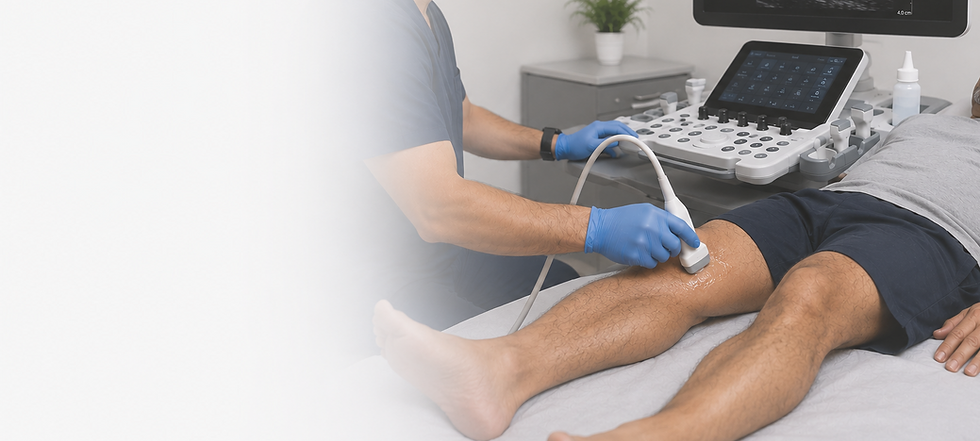
During the examination, you will lie comfortably on an examination table while a small amount of warm ultrasound gel is applied to your leg. A handheld ultrasound transducer is gently moved over the skin to obtain detailed images of the arteries and evaluate blood flow throughout the leg.
The sonographer will examine multiple arteries from the groin to the ankle, using Doppler ultrasound to assess blood flow and identify any areas of narrowing or blockage. Depending on the reason for your examination, you may be asked to change positions during the study to obtain the best possible images.
The examination is painless and does not involve needles, injections, or radiation. Once the study is complete, the ultrasound gel will be removed, and you may immediately return to your normal daily activities.
How to Prepare for Your Lower Extremity Arterial Ultrasound
A Lower Extremity Arterial Ultrasound requires very little preparation. Following these simple instructions will help ensure your examination is completed comfortably and efficiently.
Before Your Appointment
✓ No fasting is required. You may eat and drink normally before your examination.
✓ Continue taking your usual medications unless instructed otherwise by your healthcare provider.
✓ Wear loose-fitting clothing or shorts that allow easy access to your legs. You may be asked to change into an examination gown.
✓ Avoid wearing compression stockings to your appointment unless instructed otherwise by your healthcare provider, as they may need to be removed before the examination.
✓ If you have had previous vascular surgery, angioplasty, stent placement, or bypass graft surgery involving your legs, let the technologist know before your examination.
✓ Bring any previous ultrasound, CT angiography (CTA), MR angiography (MRA), angiogram, or other vascular imaging reports related to your arteries if they were performed at another facility.
✓ Arrive 10–15 minutes early to complete any necessary paperwork before your examination.
A Lower Extremity Arterial Ultrasound requires no injections, contrast dye, radiation, or special preparation, making it a simple, safe, and convenient examination. Following these instructions will help ensure your examination is performed as comfortably and efficiently as possible.
Frequently Asked Questions
Q: Is a lower extremity arterial ultrasound painful?
A: No. A lower extremity arterial ultrasound is a painless, non-invasive examination. You may feel slight pressure from the ultrasound transducer as it moves along your leg, but the procedure should not cause discomfort.
Q: How long does the examination take?
A: Most lower extremity arterial ultrasound examinations are completed in 45–60 minutes, depending on whether one or both legs are being evaluated and the images required.
Q: Do I need to fast before my appointment?
A: No. In most cases, no fasting or special preparation is required. Unless your healthcare provider gives you different instructions, you may eat, drink, and take your medications as usual.
Q: Does a lower extremity arterial ultrasound use radiation?
A: No. Lower extremity arterial ultrasound uses high-frequency sound waves and Doppler technology to evaluate blood flow in the arteries of your legs. The examination does not expose you to radiation.
Q: What is peripheral arterial disease (PAD)?
A: Peripheral arterial disease (PAD) is a condition in which the arteries that supply blood to the legs become narrowed or blocked, usually due to plaque buildup (atherosclerosis). Reduced blood flow can cause symptoms such as leg pain while walking, cramping, numbness, slow-healing wounds, or, in severe cases, pain at rest. A lower extremity arterial ultrasound is one of the most effective ways to diagnose and monitor PAD.
Q: Will I receive my results immediately?
A: After your examination, the images will be carefully reviewed and interpreted by a board-certified radiologist. Your results will then be sent to your referring healthcare provider, who will discuss the findings with you and recommend any necessary next steps.
Q: Who should have a lower extremity arterial ultrasound?
A: Your healthcare provider may recommend a lower extremity arterial ultrasound if you experience leg pain while walking, have poor circulation, non-healing wounds, diabetes, peripheral arterial disease, or other risk factors such as smoking, high blood pressure, or high cholesterol. It is also commonly used to monitor patients who have undergone vascular surgery or arterial stent placement.
Q: Can I drive after my examination?
A: Yes. A lower extremity arterial ultrasound does not require sedation or recovery time, so you may drive yourself home and resume your normal daily activities immediately after your examination.
Still Have Questions?If you have questions about your lower extremity arteria ultrasound or need help scheduling your examination, our team is here to help.
Schedule Your Lower Extremity Arterial Ultrasound
Scheduling your Lower Extremity Arterial Ultrasound is quick and convenient. If you are experiencing symptoms of poor circulation, have been diagnosed with peripheral arterial disease (PAD), or need follow-up after a vascular procedure, this examination can provide valuable information about the blood flow in your legs.
Choose the option below that best fits your needs:
Lower Extremity Arterial Ultrasound – One Leg (Unilateral) or Lower Extremity Arterial Ultrasound – Both Legs (Bilateral)
Our experienced ultrasound technologist performs every examination using advanced vascular ultrasound technology in a comfortable, patient-focused environment. A board-certified physician will interpret your study, and the results will be sent promptly to your referring provider. Self-pay appointments are also available if you do not have a referral.
Book your appointment online or contact our office if you have any questions. We're happy to help you choose the examination that's right for you.
If you are experiencing sudden severe leg pain, a cold or pale leg, loss of sensation or movement, or symptoms of a medical emergency, seek immediate medical attention or call 911.
Why Choose Alpha Vascular?
Experienced Sonographer

Board-Certified Interpretation

Advanced Ultrasound Technology
