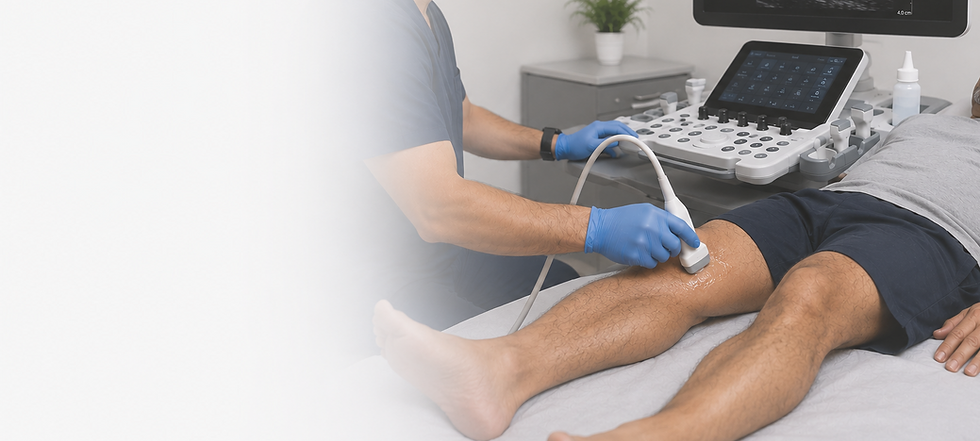
What Is a Lower Extremity Vein Mapping Ultrasound?
A Lower Extremity Vein Mapping Ultrasound is a safe, noninvasive imaging examination used to evaluate and measure the veins of one or both legs. This examination provides detailed information about the size, location, depth, and overall quality of the veins, helping determine whether they are suitable for surgical or vascular procedures.
Using high-frequency sound waves, your sonographer identifies and measures the superficial and deep veins while documenting their course through the leg. The examination also evaluates vein compressibility, blood flow, and any abnormalities that may affect their use, such as clot formation, scarring, or other structural changes.
A Lower Extremity Vein Mapping Ultrasound is commonly performed before bypass surgery, dialysis access creation, vein harvesting, or other vascular procedures that require a healthy vein for treatment. It may also be performed to evaluate the availability of suitable veins for future surgical planning.
Because successful vascular procedures often depend on selecting the most appropriate vein, this examination plays an important role in preoperative planning, helping your surgeon choose the best vein while reducing the risk of complications and improving long-term outcomes.
Why Is a Lower Extremity Vein Mapping Ultrasound Performed?
A Lower Extremity Vein Mapping Ultrasound is performed to evaluate the veins of the legs and determine whether they are suitable for a planned medical or surgical procedure. This examination provides detailed, real-time images of the veins while measuring their size, depth, continuity, and overall condition without the use of radiation, contrast dye, or invasive procedures.
This examination is most commonly performed before bypass surgery or other vascular procedures to identify veins that may be used as surgical conduits. It is also frequently performed before vein harvesting, helping surgeons determine which veins are the best candidates for the planned procedure.
A Lower Extremity Vein Mapping Ultrasound can identify previous blood clots, scarring, narrowing, varicose veins, or other abnormalities that may affect the quality or suitability of the veins. It also provides accurate measurements of vein diameter and location, allowing surgeons to plan procedures more effectively.
Because ultrasound provides real-time imaging, it allows the technologist to evaluate both the structure of the veins and blood flow while confirming that the veins compress normally. This information helps improve surgical planning, reduce complications, and increase the likelihood of a successful procedure.
As a safe, painless, and radiation-free examination, a Lower Extremity Vein Mapping Ultrasound is the preferred first-line imaging study for evaluating leg veins before vascular surgery, vein harvesting, and other procedures requiring detailed assessment of the venous system.
Common Reasons to Schedule a Lower Extremity Vein Mapping Ultrasound
A Lower Extremity Vein Mapping Ultrasound is performed to evaluate the veins of the legs before vascular surgery or other procedures requiring suitable veins for bypass or vascular access. You may benefit from this examination if you are planning surgery, require vein harvesting, or need evaluation of your leg veins before a vascular procedure.
-
Preoperative evaluation before coronary artery bypass graft (CABG) surgery
-
Preoperative evaluation before peripheral arterial bypass surgery
-
Vein mapping before vein harvesting
-
Assessment of vein size and quality before vascular surgery
-
Evaluation of vein suitability for use as a surgical conduit
-
Planning for lower extremity vascular reconstruction
-
History of previous vein harvesting
-
History of varicose veins
-
History of deep vein thrombosis (DVT)
-
Prior leg or vascular surgery
-
Evaluation of abnormal findings from a physical examination or another imaging study
-
Assessment of vein anatomy before vascular procedures
-
Evaluation of leg veins in patients with chronic vascular disease
-
Preoperative planning for other procedures requiring suitable lower extremity veins
A Lower Extremity Vein Mapping Ultrasound provides detailed, real-time images and measurements of the leg veins, helping determine their size, depth, continuity, and overall suitability for surgical use. It is a safe, painless, and radiation-free examination that helps surgeons plan procedures more effectively and improve the likelihood of successful surgical outcomes.
What to Expect During Your Examination
A Lower Extremity Vein Mapping Ultrasound is a safe, painless, and noninvasive examination that typically takes 30 to 45 minutes, depending on whether one or both legs are being evaluated.
During the examination, you will be asked to lie comfortably on an examination table while a clear, water-based ultrasound gel is applied to your skin. The gel helps transmit sound waves and allows detailed images of your leg veins to be obtained.
Your sonographer will gently move an ultrasound transducer along your leg while evaluating the superficial and deep veins. The examination includes measuring the diameter of the veins, documenting their location and course, assessing vein compressibility, and evaluating blood flow to determine whether the veins are suitable for use in a planned vascular or surgical procedure.
If requested, the veins may be marked on your skin to assist with surgical planning. This mapping provides your surgeon with a detailed roadmap of the available veins before your procedure.
The examination does not involve radiation, injections, or contrast dye. Most patients experience little to no discomfort and may return to their normal daily activities immediately after the examination.
How to Prepare for Your Lower Extremity Vein Mapping Ultrasound
Preparing for your Lower Extremity Vein Mapping Ultrasound is simple, and no special preparation is typically required. You may eat and drink normally and continue taking your regular medications unless you have been given different instructions.
If you have had previous vein surgery, vein harvesting, vascular bypass surgery, deep vein thrombosis (DVT), varicose vein treatment, or other vascular procedures, please let your sonographer know before your examination. It is also helpful to mention any current symptoms involving your legs, as well as any upcoming surgical procedure for which the vein mapping is being performed.
Before Your Appointment
✓ Wear comfortable clothing, such as shorts or loose-fitting pants, that allows easy access to your leg(s). You may be asked to change into a medical gown for the examination.
✓ Continue taking your prescribed medications unless you have been instructed otherwise.
✓ You may eat and drink normally before your appointment unless you have received different instructions.
✓ Avoid applying lotions, oils, or creams to your legs on the day of your examination, as they may interfere with the ultrasound gel and image quality.
✓ Bring any relevant medical records or previous vascular ultrasound reports if they are available and have not already been provided.
✓ Arrive 10–15 minutes early to complete any necessary paperwork and check in before your scheduled appointment.
A Lower Extremity Vein Mapping Ultrasound requires no injections, contrast dye, radiation, or special preparation, making it a simple, safe, and convenient examination. Following these instructions will help ensure your examination is performed as comfortably and efficiently as possible.
Frequently Asked Questions
Q: What is a Lower Extremity Vein Mapping Ultrasound?
A: A Lower Extremity Vein Mapping Ultrasound is a noninvasive examination that evaluates and measures the veins in one or both legs. It provides detailed information about the size, location, depth, and quality of the veins to help determine whether they are suitable for vascular or surgical procedures.
Q: Is a Lower Extremity Vein Mapping Ultrasound painful?
A: No. The examination is painless and noninvasive. You may feel mild pressure from the ultrasound transducer, but most patients experience little to no discomfort.
Q: How long does the examination take?
A: Most examinations take approximately 30 to 45 minutes, depending on whether one or both legs are being evaluated.
Q: Do I need to prepare for the examination?
A: No special preparation is usually required. You may eat, drink, and take your usual medications unless you have been instructed otherwise.
Q: Will I be exposed to radiation?
A: No. Ultrasound uses high-frequency sound waves to create images and does not involve radiation.
Q: Why do I need vein mapping before surgery?
A: Vein mapping helps identify the size, quality, and location of your veins so your surgeon can determine whether they are suitable for use during a planned vascular or surgical procedure. Careful preoperative planning can improve the success of the procedure.
Q: Will the veins be marked on my skin?
A: In some cases, yes. If requested by your surgeon, the sonographer may mark the location of suitable veins on your skin to assist with surgical planning.
Q: Can I return to my normal activities after the examination?
A: Yes. You may resume your normal daily activities immediately after the examination.
Q: What happens if my veins are not suitable for surgery?
A: If the examination shows that the veins are too small or have other abnormalities, your surgeon may discuss alternative treatment options or consider using a different vein or graft for your procedure.
Q: Can I schedule this examination without a referral?
A: Yes. Depending on your circumstances and applicable regulations, this examination may be scheduled as a self-pay service or following a referral from a healthcare provider.
Schedule Your Lower Extremity Vein Mapping Ultrasound
If you are preparing for bypass surgery, vein harvesting, or another vascular procedure, scheduling a Lower Extremity Vein Mapping Ultrasound is an important step in evaluating the veins in your legs and helping your surgeon plan the most appropriate treatment. Our experienced ultrasound technologist performs comprehensive, high-quality examinations in a comfortable outpatient setting using advanced ultrasound technology.
Choose the option below that best fits your needs. Whether your healthcare provider has requested evaluation of one leg or both legs, we offer unilateral (one leg) and bilateral (both legs) lower extremity vein mapping ultrasound examinations to provide the most appropriate assessment.
You can schedule your appointment online at your convenience or contact our office if you need assistance selecting the appropriate examination or have questions about your upcoming procedure. We are happy to help determine which Lower Extremity Vein Mapping Ultrasound is right for you.
If you experience sudden severe leg pain, significant swelling, discoloration, numbness, or other emergency symptoms, seek immediate medical attention or call 911.
Why Choose Alpha Vascular?
Experienced Sonographer

Board-Certified Interpretation

Advanced Ultrasound Technology
